
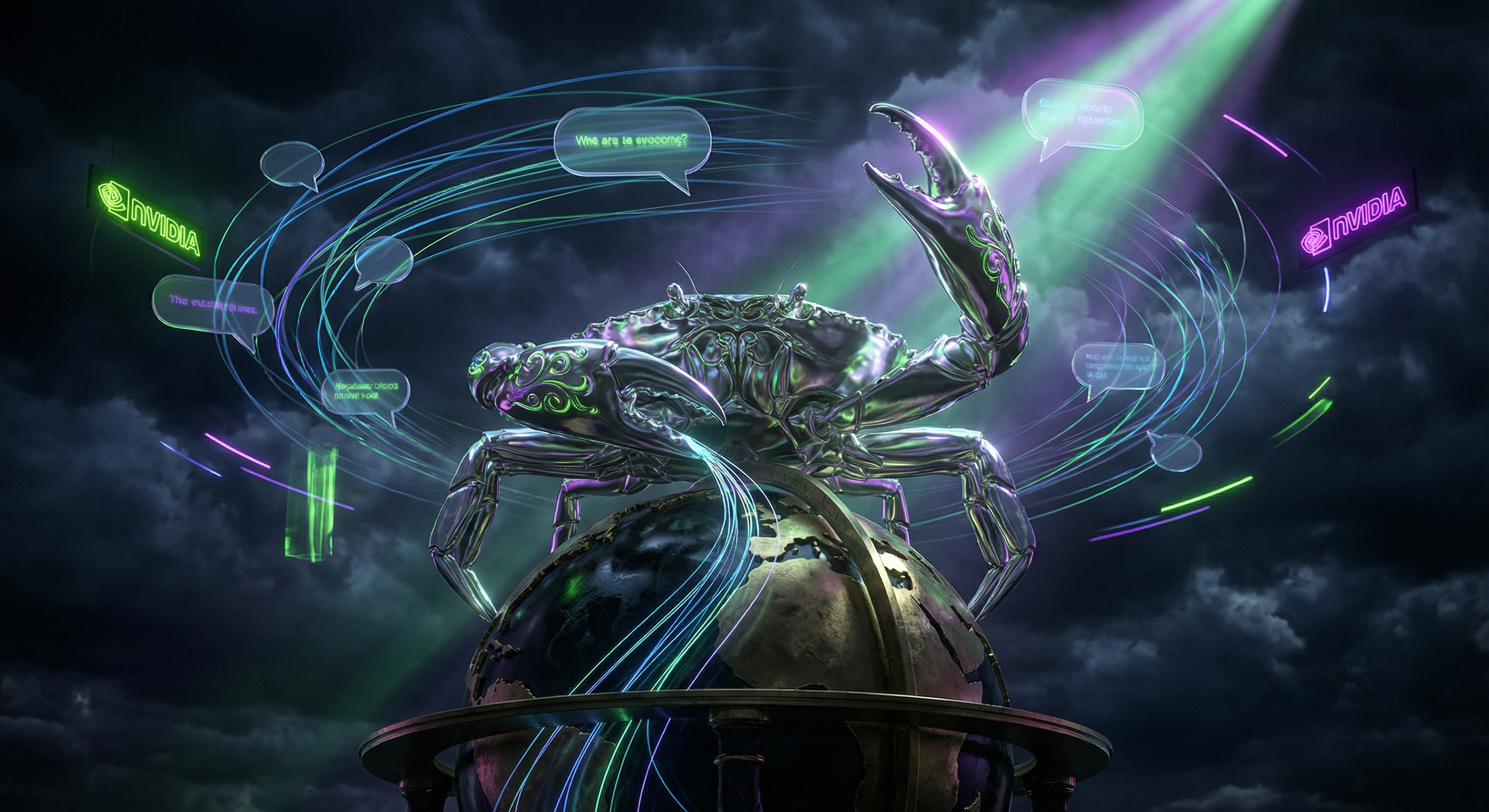
March 2026 has been a breakout month for OpenClaw. Between back-to-back major releases, an NVIDIA partnership announcement at GTC, and a wave of new users setting up their first agents, the community forums and subreddits have been unusually rich this week. Here's what's worth knowing.
The Model Stack Question
The most active thread in r/AgentsOfAI this week is a simple question: what are your model stacks for March 2026?
The answers reveal a clear emerging consensus around a tiered approach:
- Daily background tasks (inbox monitoring, calendar checks, web search, file organization): MiniMax M2.5-highspeed or Gemini Flash. Fast, cheap, good enough.
- Complex reasoning and planning (multi-step automations, code review, content drafting): Claude Sonnet or GPT-4o. Worth the cost when accuracy matters.
- Heavy lifting (long-context analysis, deep research, architecture decisions): Claude Opus or Gemini Pro. Reserved for tasks where errors are expensive.
The consensus is to set your daily driver model to something fast and economical and reserve the heavier models for tool calls or explicit /model overrides. The v2026.3.25 release makes this easier — you can now set explicit model overrides through the /v1/chat/completions endpoint, and the Control UI's agent page shows a "Not set" placeholder in the model selector so you always know when you're falling back to the default.
NVIDIA NemoClaw: What It Actually Means
Announced at GTC on March 16, NVIDIA NemoClaw is a single-command installer that bundles Nemotron models and the OpenShell runtime on top of OpenClaw. Jensen Huang called OpenClaw "the operating system for personal AI" on stage — strong words that landed with the community.
What NemoClaw adds practically:
- OpenShell isolation: an infrastructure-level sandbox with deny-by-default networking, kernel isolation, and policy-based guardrails — the missing security layer beneath agent skills
- Local model support: Nemotron models run on-device, with a privacy router for cloud fallbacks
- Hardware targets: GeForce RTX PCs, RTX PRO workstations, DGX Station, DGX Spark
The reaction in r/selfhosted and r/openclaw has been cautiously positive. Users appreciate that someone is finally building the sandbox layer that OpenClaw's trust model has always needed. The skepticism centers on whether NemoClaw is a meaningful security improvement or primarily a hardware sales vehicle for NVIDIA.
Cisco's parallel DefenseClaw project is positioned similarly but is vendor-neutral and open-source, giving the community two competing approaches to the same problem. Competition here is good.
v2026.3.25 Release: The Highlights Most People Missed
We covered this release in our deep-dive earlier this week, but a few items are getting overlooked in community discussion:
Container support is here. The new --container flag and OPENCLAW_CONTAINER environment variable let you run openclaw commands directly inside a running Docker or Podman container (#52651). This is quietly huge for self-hosters who containerize everything — you can now manage your OpenClaw instance without exec-ing into the container manually.
Discord thread naming got smarter. The new autoThreadName: "generated" option lets Discord auto-create threads with LLM-generated titles instead of message-derived names (#43366). Small UX win, but it keeps threaded conversations organized in busy servers.
Node 22.14+ is now supported. The floor was lowered from a higher Node 22 build to 22.14+, which means users who couldn't update without upgrading Node first can now upgrade safely. The CLI also preflights the target package's engines.node before running openclaw update, so you get a clear error instead of a broken install if your runtime is outdated.
The Fastest-Growing Open Source Project in History
That's the claim being made — by NVIDIA's Jensen Huang on stage at GTC, and increasingly echoed in media coverage. Whether it's literally true or marketing hyperbole, the community growth is real: the r/openclaw subreddit and associated channels have added tens of thousands of members in the past month alone.
The KD Nuggets framing — "the AI agent tool going viral already in 2026" — captures the mood accurately. OpenClaw isn't just growing, it's entering cultural awareness in a way that tools like Home Assistant or n8n took years to achieve.
The next 90 days will be telling. The security crisis with ClawHavoc could dampen adoption if it's not handled cleanly, or it could accelerate the maturation of the skill ecosystem if the team and community respond well. Either way, March 2026 will be a chapter in the OpenClaw story.
Sources: r/AgentsOfAI · NVIDIA NemoClaw · GitHub Releases · KD Nuggets