
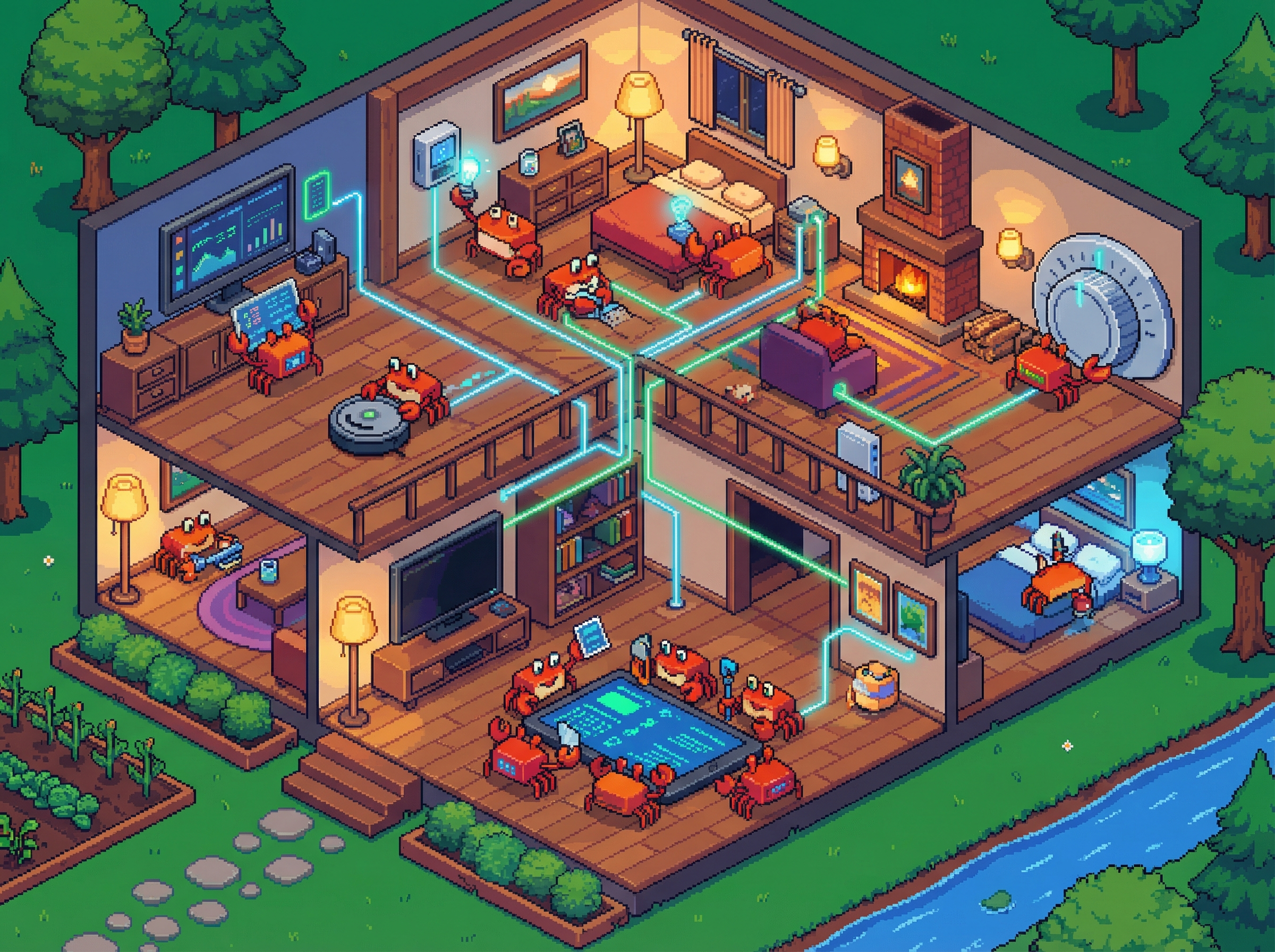
The OpenClaw community continues to push the boundaries of what a self-hosted AI agent can do in a home environment. This week's roundup pulls together the most interesting real-world deployment stories and discussions surfacing across Reddit and the broader OpenClaw ecosystem.
"I Gave My Home a Brain" — 50 Days of Self-Hosted AI
One of the most detailed community posts making the rounds is a writeup on r/openclaw titled "I gave my home a brain. Here's what 50 days of self-hosted AI looks like." The author documented a complete home automation stack built around OpenClaw, integrated with:
- Roborock — Scheduled and on-demand vacuuming triggered by natural language
- Philips Hue — Scene management and context-aware lighting (e.g., "movie mode" triggered automatically)
- Home Assistant — Bridging OpenClaw to the broader smart home layer
- Google Nest Hub — Voice entry point on the kitchen device
What makes the post valuable beyond the hardware list is the candid account of what worked and what didn't after nearly two months. The author noted that the most reliable automation patterns were scheduled tasks (garbage day reminders, weekly summaries) and that ad-hoc "do this now" requests required more prompt tuning than expected.
OpenClaw Agents and Local AI Automation
A post on r/automation — "OpenClaw agents are changing how I think about local AI automation" — resonated with the community for its framing rather than its technical depth. The author made a clean case for why local-first matters in automation: configuration and interaction history stay on your own hardware, you're not dependent on a vendor's uptime or pricing decisions, and you can integrate with local network services that cloud agents can never reach.
The post sparked a thread about the distinction between OpenClaw as an orchestration layer versus as a direct automation tool. Several commenters pointed out that the real power comes from combining OpenClaw's agent loop with purpose-built tools via MCP or skill plugins, rather than trying to do everything through chat commands alone.
Home Lab Security: A Growing Conversation
On r/homelab, a post on "Securing and Hardening AI Agents for Home Automation and Lab Management" drew substantial engagement. The original poster asked for best practices around:
- Network isolation — Running OpenClaw on a dedicated VLAN, restricting what it can reach
- RBAC — Limiting which tools and exec commands the agent can use
- Prompt injection mitigation — Preventing malicious content from hijacking agent behavior
- Sandbox execution — Using OpenClaw's built-in sandbox container to isolate shell commands
The timing is relevant: v2026.3.28 patched a critical privilege escalation vulnerability, and the community is clearly paying more attention to the attack surface that comes with giving an AI agent shell access to your home network. OpenClaw's exec approval system and security policies are getting more scrutiny — which is healthy.
Practical Takeaway
The common thread across this week's community activity is that real deployments are maturing. People aren't just setting up OpenClaw for the first time — they're sharing what they've learned after weeks or months of running it as a daily driver. The conversations are shifting from "how do I install this" to "how do I make this reliable and secure."
If you're exploring OpenClaw for home automation, the official documentation and the r/openclaw community are both strong starting points.