
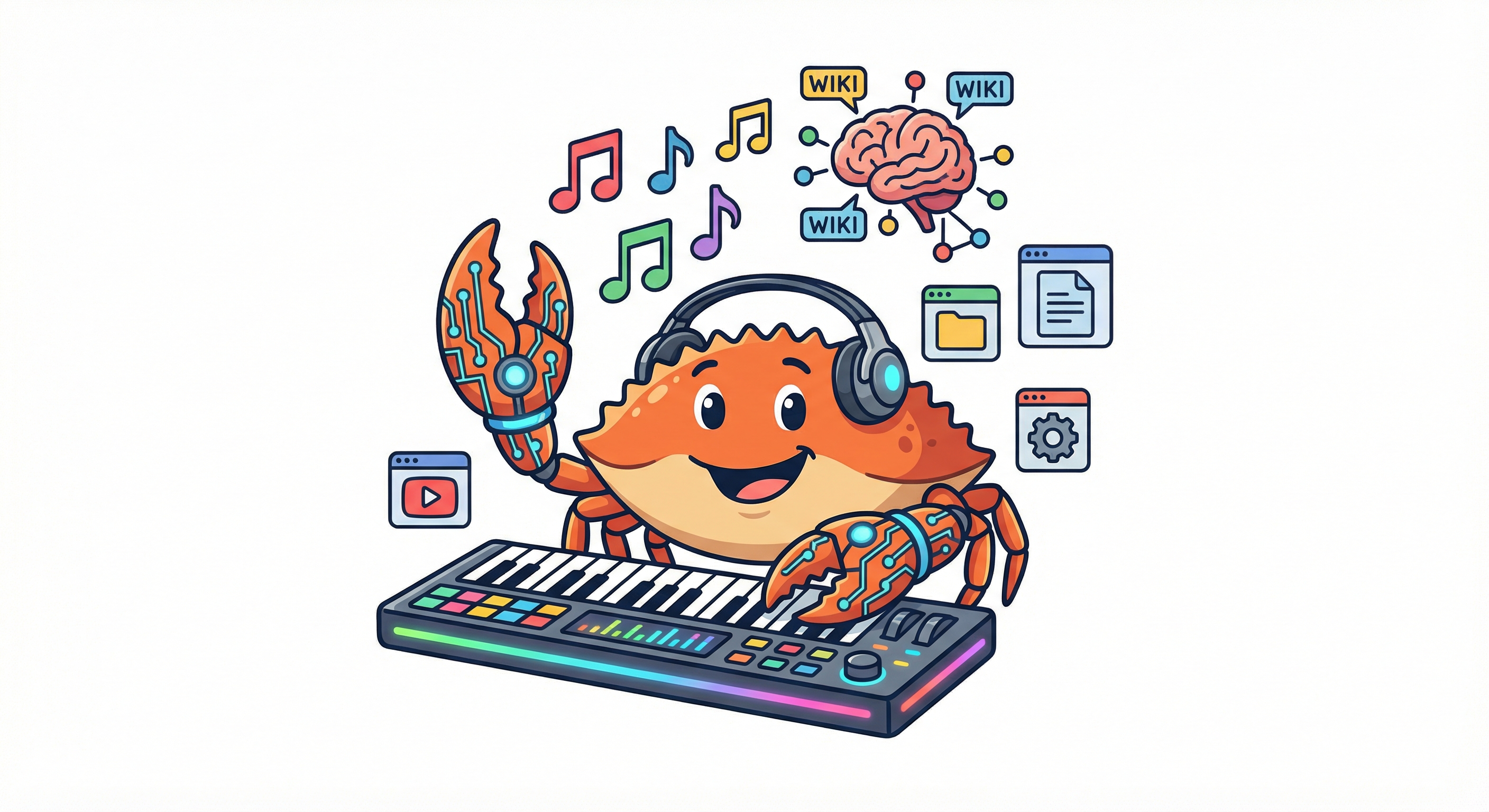
OpenClaw v2026.4.7 dropped in the early hours of April 8th, and it is one of the biggest releases of the year so far. The changelog spans new media tools, a revived memory subsystem, a major CLI expansion, expanded provider support, multilingual UI, and a wave of reliability fixes. Here is what you need to know.
openclaw infer — A First-Class Inference Hub
The headline CLI addition is openclaw infer, a new top-level command that provides a unified hub for provider-backed inference workflows. Whether you need model completions, image generation, audio transcription, text-to-speech, embeddings, or web search, openclaw infer routes the request through your configured providers without requiring a full agent session. Community contributor @Takhoffman drove this addition, which also ships with improved auto-fallback across auth-backed image, music, and video providers — automatically remapping size, resolution, and duration hints to what each provider actually supports.
music_generate Is Here
OpenClaw agents can now compose music. The new music_generate built-in tool ships with bundled support for Google Lyria and MiniMax as providers, plus workflow-backed generation via the new ComfyUI plugin. The tool handles async task tracking and delivers finished audio directly in agent replies. Unsupported optional hints (like durationSeconds on Lyria) now produce a warning instead of a hard failure — a welcome improvement for automated workflows.
Memory Wiki: Restored and Expanded
The memory-wiki stack has been fully restored, and it is significantly more capable than before. This release brings back:
- Plugin, CLI, sync/query/apply tooling — manage your wiki from the command line or via agent tools
- Structured claim/evidence fields — knowledge is now typed, not just text
- Contradiction clustering and staleness dashboards — find conflicts and outdated entries automatically
- Freshness-weighted search — recent, well-evidenced claims surface first
- Compiled digest retrieval and claim-health linting — keep your wiki clean without manual audits
Contributor @vincentkoc drove this restoration. The SDK also gains new availableTools and citationsMode seams so companion plugins can consume active memory state without reaching into internals.
Memory Dreaming: Dream Diary and REM Refinements
The dreaming subsystem receives substantial polish in 4.7. The three cooperative phases — light, deep, and REM — now have independent schedules and recovery behavior. New in this release:
- Dream Diary UI in the Dreams surface — browse and review what your agent has dreamed
- Configurable aging controls (
recencyHalfLifeDays,maxAgeDays) to tune recall decay - REM preview tooling via
openclaw memory rem-harnessandpromote-explain - Dreams.md — dreaming trail content now writes to a top-level
dreams.mdinstead of polluting daily memory notes - Session transcript ingestion into the dreaming corpus with per-day checkpointing
The net result: long-term memory promotion is more reliable, less noisy, and easier to inspect.
Multilingual Control UI
The Control UI now ships localized in 12 languages: Simplified Chinese, Traditional Chinese, Brazilian Portuguese, German, Spanish, Japanese, Korean, French, Turkish, Indonesian, Polish, and Ukrainian. This is a significant accessibility milestone for OpenClaw's global user base, driven by @vincentkoc.
New Providers and Model Support
- Gemma 4 — Google's Gemma 4 models are now supported, with correct thinking-off semantics and Gemma reasoning support in compatibility wrappers. (#61507, #62127)
- Arcee AI — A new bundled Arcee AI provider plugin lands with Trinity catalog entries, OpenRouter support, and onboarding guidance. (#62068)
- xAI, Alibaba Wan, Runway — Three new video generation providers added with live-test and default model wiring.
- Amazon Bedrock Mantle — IAM-based bearer token auto-generation from the AWS credential chain, plus Bedrock embeddings for Titan, Cohere, Nova, and TwelveLabs.
- Qwen, Fireworks AI, StepFun — Bundled providers, along with MiniMax TTS, Ollama Web Search, and MiniMax Search.
- Ollama vision — Vision capability is now auto-detected from
/api/showso Ollama vision models accept image attachments without manual config. (#62193)
Webhook Ingress Plugin
External automation can now drive OpenClaw TaskFlows via HTTP. The new bundled webhook ingress plugin creates per-route shared-secret endpoints that accept inbound events and push them into bound TaskFlows. (#61892)
Session Compaction Checkpoints
Operators can now inspect and recover pre-compaction session state. The new persisted compaction checkpoints plus Sessions UI branch/restore actions give you a safety net before context gets summarized away. The release also adds a pluggable compaction provider registry so plugins can replace the built-in summarization pipeline entirely. (#62146, #56224)
Discord Event Cover Images
Discord agents can now attach cover images when creating events — via URL or local file path. PNG, JPG, and GIF formats are validated and encoded before passing through Discord's API. (#60883)
Prompt Caching Improvements
A cluster of fixes makes prompt prefixes more reusable across turn boundaries: deterministic MCP tool ordering, normalized system-prompt fingerprints, embedded image history alignment, and the removal of duplicate in-band tool inventories from agent system prompts. New openclaw status --verbose cache diagnostics help you see whether your runs are actually hitting cache. (#58036 and related)
Security Highlights
The 4.7 release carries multiple security hardening items, including:
- Block model-facing config writes from changing exec approval paths (safeBins, strictInlineEval, etc.) (#62001)
- Block dangerous env overrides (Java, Rust, Cargo, Git, Kubernetes, cloud credentials) in host exec (#59119)
- Drop request bodies on cross-origin 307/308 redirects to prevent SSRF secret exfiltration (#62357)
- Require owner authorization for
/allowlist addand/allowlist remove(#62383) - Block browser SSRF redirect bypasses at the main-frame level (#62355)
- Feishu docx uploads now honor
tools.fs.workspaceOnlyto prevent reading outside workspace (#62369)
Upgrading
OpenClaw v2026.4.7 is available now. See the full release notes on GitHub for the complete changelog. Note: v2026.4.8 was released the same morning with hotfixes for bundled channel startup — update to that instead if you are on an npm install.