
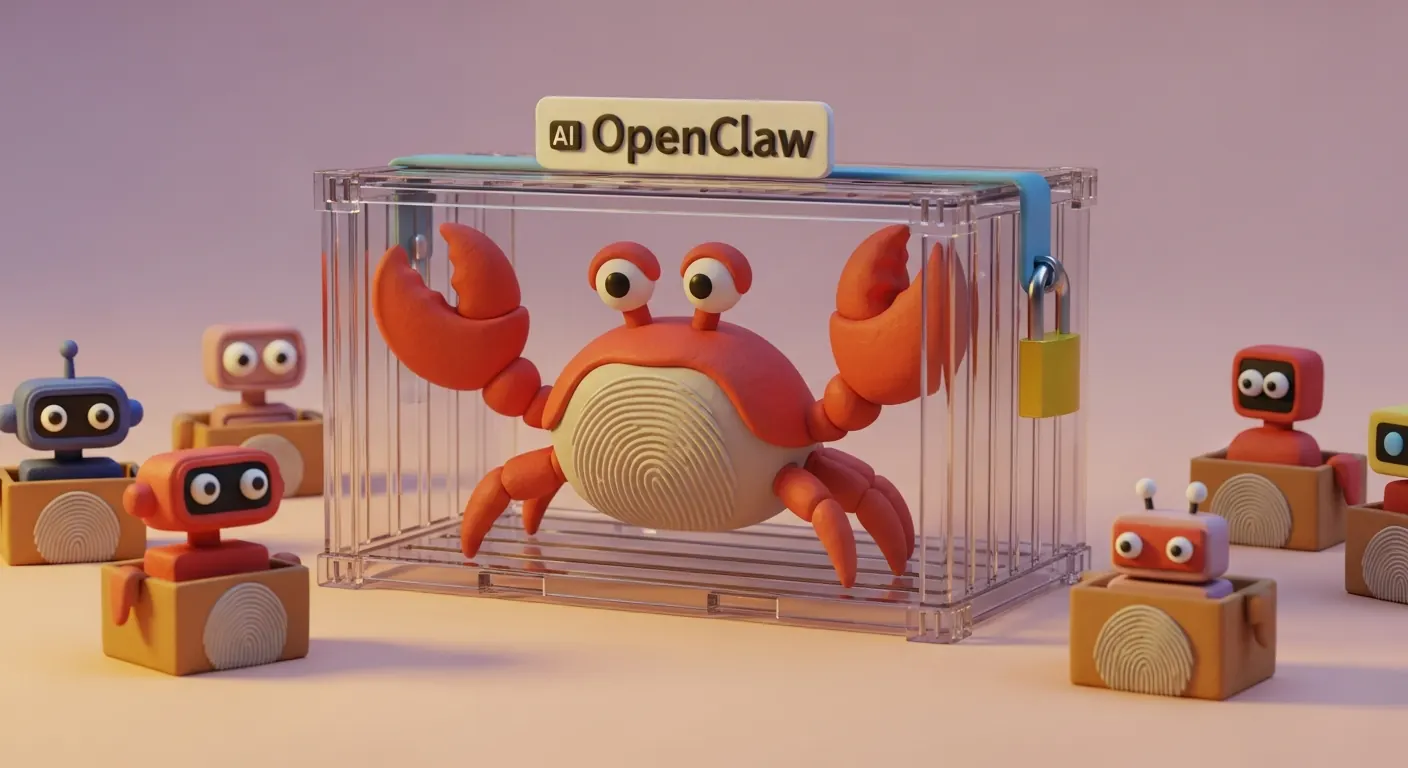
Running OpenClaw directly on your host machine is the path of least resistance — until something goes wrong. A rogue skill, an unchecked exec approval, or a plugin with unexpected side effects can touch files and processes you'd rather keep off-limits. Armorer, a new open-source project that appeared on Hacker News this week, tackles that problem head-on by wrapping your AI agents in Docker containers and fronting them with a unified control plane.
What Armorer Does
Armorer is a self-hosted local control plane for AI agents. Its core design principle is simple: your agents shouldn't have broad access to your host machine. Instead, each agent runtime — OpenClaw, Codex, Claude Code, or any combination — runs inside a Docker container that you control.
From a single CLI or web UI, you can:
- Launch and lifecycle-manage agent runtimes without manual Docker commands
- Monitor job status across all running agents in one place
- Track approvals and see what actions are being requested before they run
- Red-team your own setup — the repo includes actual red team reports documenting what Armorer caught before it ever ran in production
The project ships with skills directories for OpenClaw, Codex, and Claude, meaning each platform's agent knows how to interact with the Armorer control plane natively.
The Self-Installing Trick
One of Armorer's more interesting design choices is that it's meant to install itself via an AI agent. The README provides a prompt you can drop directly into OpenClaw (or Codex or Claude Code):
"Set up Armorer from https://github.com/ArmorerLabs/Armorer on this machine. Follow AGENTS.md and the repository instructions. Install Armorer, verify Docker, start the local UI, then help me install and configure OpenClaw through Armorer. Do not report success until the Armorer CLI works, the UI is reachable, and runtime health checks pass."
This pattern — using the agent you're about to sandbox to do the sandboxing — is either delightfully recursive or a little worrying depending on your threat model. Armorer's author is betting on the former.
Why This Matters for OpenClaw Users
The OpenClaw community has been thinking hard about isolation lately. The official "Got Safer in Public" retrospective and the subsequent "Rough Week" post both acknowledged that giving an always-on agent broad host access is a calculated risk. Armorer sits squarely in the category of tools that let you take that risk more deliberately.
It joins a growing cluster of OpenClaw-adjacent safety tooling: permission-slip adds an approval layer, AgentPort gates destructive operations with 2FA, BetterClaw enforces workflow graphs, and Clawcenter provides a local mission-control dashboard. Armorer's Docker-first approach is the most infrastructure-heavy of the bunch — but also the most thorough in terms of actual process isolation.
Getting Started
Installation is a single curl command:
curl -fsSL https://raw.githubusercontent.com/SecureNeural/Armorer/main/scripts/install.sh | sh
Or in fully automated mode:
curl -fsSL https://raw.githubusercontent.com/SecureNeural/Armorer/main/scripts/install.sh | sh -s -- --yes
After that, you can point OpenClaw at the Armorer repo and let the agent finish the rest of the setup. The repo includes detailed docs, red team reports, and a HUMANS.md for those who prefer to read before running scripts.
Armorer is MIT-licensed and lives at github.com/ArmorerLabs/Armorer. The project appeared on Hacker News on May 8, 2026, where it drew early interest from the self-hosted AI community. If Docker-first agent isolation is something you've been meaning to set up, Armorer is the most opinionated and ready-to-run option in the OpenClaw ecosystem right now.