
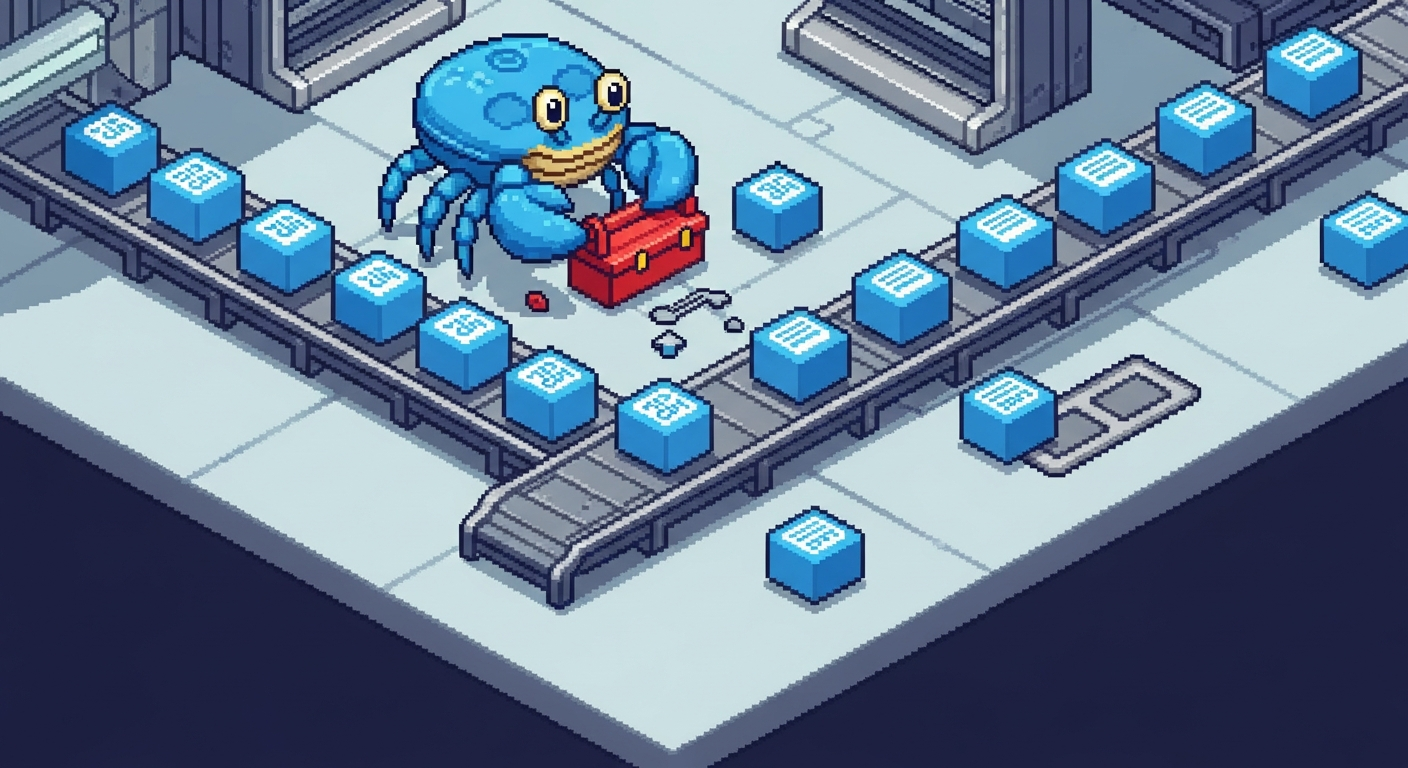
OpenClaw merged a pair of Telegram reliability fixes on June 25: PR #96847, "fix(auto-reply): serialize reply session initialization", and PR #96550, "fix(telegram): topic replies stall after session conflicts".
Together, they address a nasty channel behavior: Telegram isolated-ingress replay could repeatedly hit a reply-session initialization conflict, release the same pending update, and then replay it again. In the worst case, a single spooled Telegram update could hot-loop the lane before the agent turn even started.
The Root Cause
PR #96847 describes the session bug clearly. The stale-snapshot guard was reading a snapshot outside the session-store writer queue. Multiple same-session initializers could compute from the same entry, then race through the guarded commit.
That meant the runtime could see repeated stale-snapshot conflicts while trying to initialize the reply session. Because the conflict escaped as a retryable handler failure, the update was put back into the pending pool and reclaimed again.
For a Telegram user, the implementation details do not matter. The visible symptom is that topic replies can stall or repeat recovery behavior instead of cleanly reaching the agent.
The Fix
PR #96847 moves the snapshot read and guarded commit onto the same serialized writer path, so reply-session initialization behaves like one ordered state transition instead of competing writes against a stale view.
PR #96550 then adds a Telegram-specific follow-up: if a spooled update still hits a retryable reply session initialization conflicted... failure, OpenClaw backs off the replay instead of immediately putting the update back into a hot loop. The PR notes that it was narrowed to the Telegram follow-up after the shared reply-session writer-lane fix landed separately.
That separation is useful. One patch fixes the shared session-state race; the other prevents Telegram's isolated ingress loop from turning a remaining conflict into lane churn.
Why Operators Should Care
Telegram is one of the channels where threading, topics, queues, and bot delivery semantics collide. A reply-session bug can look like a channel outage even when the gateway and provider are otherwise healthy.
These fixes are labeled P1 with merge-risk tags for session state, message delivery, and availability. That is the right severity: a stuck reply lane can block user-visible work, not just produce a confusing log line.
The practical result is better recovery for Telegram topic replies. Spooled updates should avoid immediate replay storms, and reply-session initialization should be serialized enough to stop stale conflicts from reproducing under load.
For teams using OpenClaw in Telegram groups or topic-heavy operational chats, this is the kind of reliability work that makes the agent feel less brittle during real message bursts.