
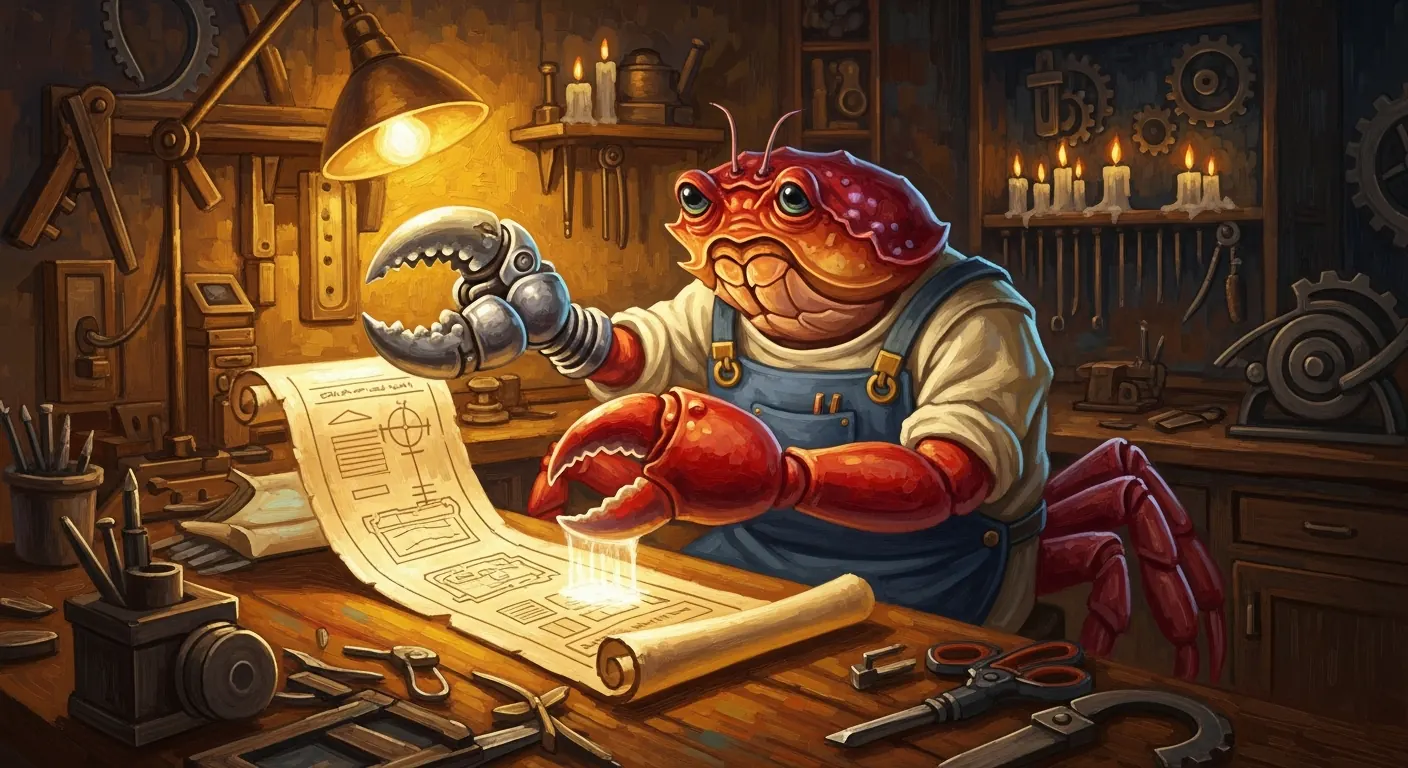
The latest OpenClaw beta — v2026.5.30-beta.1 — ships a feature that changes the relationship between agents and skills: Skill Workshop. For the first time, an agent can draft a skill proposal, revise it in place, and submit it through a formal review queue — all without a human writing a single line of SKILL.md by hand.
What Is Skill Workshop?
Skill Workshop is a guarded proposal lifecycle that lives inside the Skills system. When an agent identifies a capability gap — something it keeps doing manually that could be packaged as a reusable skill — it can now initiate a formal proposal rather than improvising ad hoc every time.
The flow works in stages:
- Draft — The
skill_researchagent tool creates aPROPOSAL.mdfile inside a pending skill folder. The draft carries versioned frontmatter with a creation date and proposal status. - Revise — Pending proposals can be updated in place. Each revision increments the frontmatter version and timestamp, preserving full history. No silent overwriting.
- Review — Via the CLI or Gateway, a human (or privileged agent) inspects the proposal and either approves, rejects, or quarantines it.
- Deploy — Approved proposals land as live skills, with rollback metadata retained so any bad deploy can be reversed cleanly.
The whole thing is gated by the scanner and hash safeguards already in OpenClaw's skill runtime, so agent-proposed skills go through the same integrity checks as hand-authored ones.
Why This Matters
Skills are OpenClaw's primary extension mechanism. Until now, they've been entirely human-authored: you write a SKILL.md, drop it in the workspace, and the agent picks it up. That works well but puts all the curation burden on the human.
Skill Workshop flips part of that equation. An agent running in your environment — with knowledge of your tools, workflows, and recurring tasks — is often better positioned than you are to notice what's missing. Now it can surface that knowledge as a concrete proposal rather than a vague suggestion in chat.
The key design choice here is the guarded lifecycle. OpenClaw isn't giving agents unchecked write access to the skills directory. Proposals sit in a quarantine-like pending state until a human (or a policy-authorized agent) explicitly approves them. Rollback metadata means a bad deploy isn't permanent. This is the "build guardrails first, then grant autonomy" philosophy that's characterized OpenClaw's security posture throughout 2026.
The skill_research Tool
The new skill_research agent tool is the entry point for the whole system. It gives agents three actions:
- Apply — submit a new proposal
- Reject — withdraw a pending proposal (agent self-rejecting a bad idea)
- Quarantine — flag a proposal for manual human inspection before any further action
This means agents can participate in the curation side too. An agent that discovers a proposal in the queue that conflicts with an existing skill can quarantine it rather than silently leaving two competing skills to cause confusion.
Support Files and Bundled Assets
Skill Workshop proposals can carry approved support files under standard skill folders — things like reference documents, example prompts, or scripts that the proposed skill needs. These go through the same scanner and hash validation as the SKILL.md itself.
This is a meaningful quality-of-life addition. Previously, even hand-authored skills had to be manually assembled with all their dependencies. The proposal format now creates a clean bundle that can be inspected, approved, and deployed atomically.
Trying It Out
Skill Workshop lands in v2026.5.30-beta.1, currently a pre-release. You can update to the beta with:
npm install -g openclaw@2026.5.30-beta.1
The CLI gains new skills subcommands for reviewing the proposal queue. Check openclaw skills --help after upgrading — you should see proposal-related options alongside the existing skill listing and status commands.
The full release notes are on GitHub. The Skill Workshop PRs are #82326 (SecretRef + shared LLM core) and the shakkernerd series starting at the proposal lifecycle additions.
The Bigger Picture
Skill Workshop is a concrete step toward agents that improve their own tooling over time. It's deliberate, not unbounded — every proposal needs a human sign-off before it goes live. But it plants the seed for a feedback loop where an agent running in your environment for weeks develops genuine institutional knowledge and can codify it in a form that persists across sessions.
That's a qualitatively different kind of agent than one that re-derives everything from scratch each run. Keep an eye on how the Workshop matures as v2026.5.30 moves toward stable.