
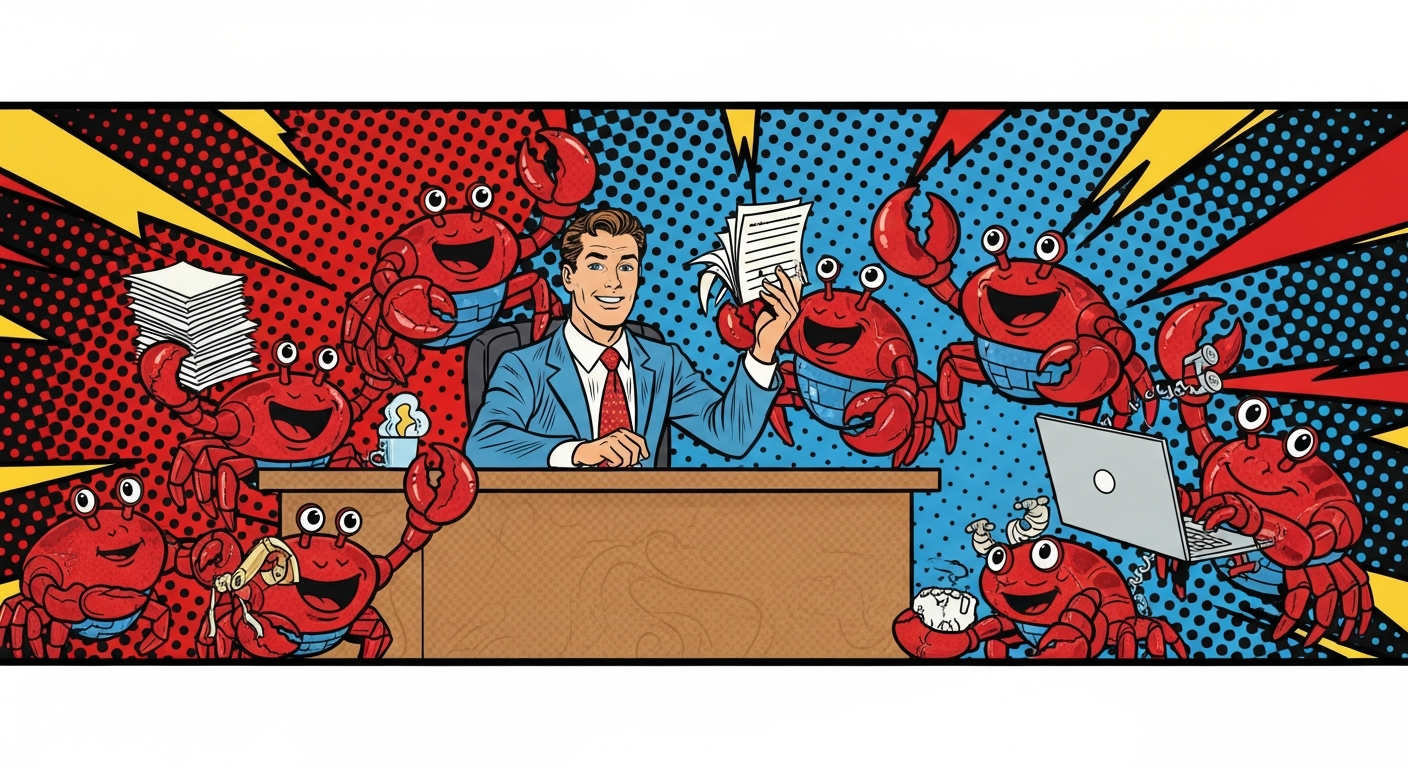
OpenClaw just cleared a milestone that most open-source projects never reach: a feature placement in the New York Times Magazine.
The June 4, 2026 piece — titled "The Small-Business Owners Managing Whole Armies of A.I. Employees" — is squarely about what happens when everyday entrepreneurs stop using AI as a chatbot and start using it as a workforce. OpenClaw is named directly in the article's URL, putting it alongside the tools reshaping how small businesses actually operate.
From Niche to Mainstream
Until recently, OpenClaw's audience was a predictable mix: developers, home-lab enthusiasts, security researchers, and self-hosters. The platform's setup process — gateway, node pairing, skills, AGENTS.md — rewards the technically minded and intimidates everyone else.
But the story the Times is telling isn't about hackers or early adopters. It's about the small-business owner who runs procurement scans every morning, the marketing agency director who has agents monitoring client inboxes, and the solo operator who offloaded recurring research tasks to an AI they can actually trust. These are the people building on top of OpenClaw not because they want to run a side project, but because the automation pays for itself quickly.
This shift in audience is significant. The Times Magazine doesn't profile niche developer tools — it profiles cultural phenomena. When it frames OpenClaw in the context of small business labor, it's making an editorial claim about where autonomous AI has already landed, not where it might someday go.
What's Driving the Small-Business Surge
The pattern makes sense when you look at OpenClaw's recent trajectory. The platform has shipped:
- Workboard for multi-agent task coordination
- Skill Workshop for safe, reviewable agent behaviors
- HolaClaw for one-click Mac installs with sane security defaults
- Carapace for vision and sensor capabilities on mobile
- Native iPad and Windows support
Each of these lowers the barrier for non-developer users. A small business owner doesn't need to understand openclaw gateway start if HolaClaw handles that with a drag-to-Applications install. They don't need to understand skill safety if Skill Workshop shows a review queue before anything runs permanently.
The result: OpenClaw is increasingly the platform under tools that non-technical users are comfortable with. The small-business owners in the Times piece are probably running OpenClaw in the background of something that looks much simpler on the surface.
The HN Reaction
The article hit Hacker News on June 4 and picked up early traction. HN readers tend to be skeptical of AI hype, but a NYT Magazine feature about actual small business use cases — not theoretical productivity gains — lands differently than a press release. The comment thread is early, but the story's presence there signals that the developer community is watching the mainstream adoption curve with interest.
Why This Matters for the Ecosystem
Mainstream coverage of this kind tends to do two things at once: it validates existing users ("yes, you're doing something real") and it pulls in new ones who would never have found the GitHub repo on their own.
For the broader OpenClaw ecosystem — ClawHub skill authors, companion app builders, ecosystem security tools like ArmorClaw and PrivateClaw — a NYT feature is effectively free advertising. Every small-business owner who reads that piece and decides to try OpenClaw is a potential user of the skills, plugins, and companion apps that the community has been building.
The platform has been growing steadily since its early days as a personal assistant framework. The Times feature suggests that growth is now compounding into something harder to ignore.
Source: The New York Times Magazine | HN Discussion